
The best beach routine is rarely the one with the most steps. It is the one that cleanses without stripping, restores comfort and maintains sun protection. Daily cleansing and professional skin cleansing are different: one removes everyday residue; the other may involve an individual assessment and extraction only when appropriate.
Clouds and cool weather do not switch UV off
Temperature is not a measure of ultraviolet radiation. The American Academy of Dermatology notes that UV exposure continues on cloudy and cool days. The World Health Organization also explains that water and sand may reflect UV.
Look at the daily UV index rather than the colour of the sky. When exposure is expected, combine shade, clothing, a hat, sunglasses and broad-spectrum sunscreen. Reapply according to the product directions, especially after swimming, sweating or towel drying.
In short: plan protection around UV exposure, not around how warm the day feels.
After the beach, remove residue gently
Rinse away salt, sand and sweat. For the face, use a gentle cleanser and comfortable water temperature. Scrubbing, brushes and repeated washing can make the skin barrier feel more vulnerable. A comparative study of cleansing agents found that washing changed skin-barrier measurements and alkaline soaps raised skin pH for longer.
Follow with a moisturiser whose texture you enjoy using. Even oily skin can feel dehydrated or sensitised after sun, wind, water and cleansing. Burning and tightness are not proof that a product is working.
Practical tip: cleanse once with gentle movements, moisturise and give the skin time to settle.
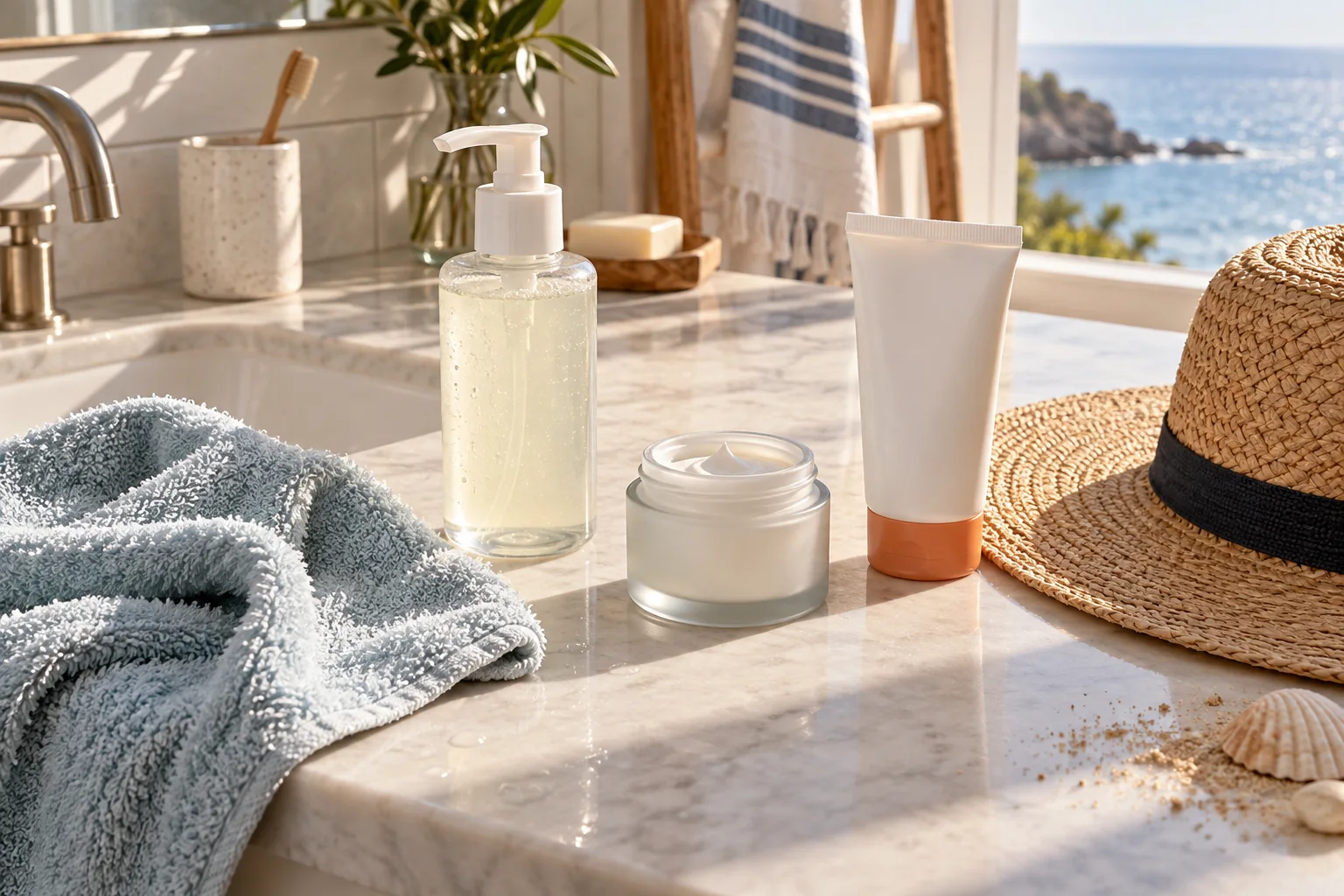
What if skin looks oilier or spots appear?
Heat and humidity affect some people more than others. In a study of 171 people with acne in a tropical climate, 40.4% reported summer worsening. That is an observation in one group, not a rule for everyone.
Avoid answering every breakout with more washing, scrubs or several new acids. Keep the routine simple for a few days and do not pick lesions. Persistent, painful or scarring acne deserves assessment by a dermatologist.
Practical tip: when skin becomes unsettled, simplify before adding new active ingredients.
When can professional cleansing help?
It may be useful when there are blackheads, uneven texture or a need to reassess the routine, provided the treatment respects the skin's current condition. Tell the professional about sunburn, irritation, wounds, active cold sores, medication or dermatological treatment. Sometimes the best care is to postpone.
In short: professional cleansing should follow the condition of your skin that day, not a fixed calendar.